What’s the Difference Between a Moving Head Spot and a Beam Light?

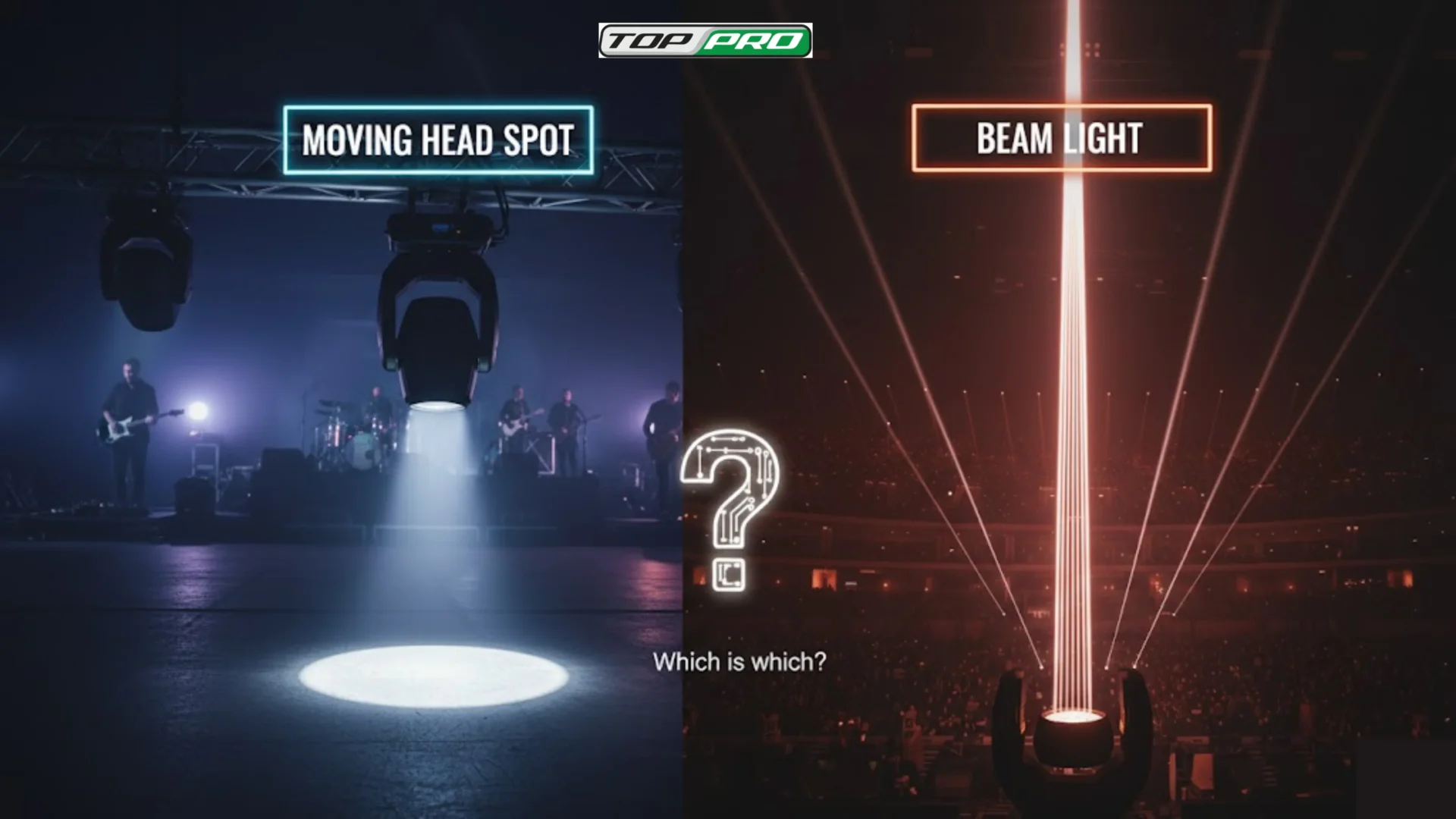
If you’ve ever stood in front of a light show and wondered why some fixtures carve sharp columns through the air while others paint crisp shapes and gobos onstage, you’ve already seen the contrast between beam lights and moving head spots. Both belong to the same family of intelligent fixtures — and both are staples in concerts, clubs, and houses of worship — but they serve different purposes in your rig.
Let’s break down the real-world differences, how they work, and when to choose each.
Moving Head Spot: The All-Around Performer
A moving head spot is your go-to for creating patterns, texture, and focusable projection. Think of it as the lighting equivalent of a DSLR camera lens: it’s designed for versatility.
Key Traits
- Adjustable zoom: You can widen or tighten the beam angle, making it perfect for both aerial and surface projection.
- Gobo wheels: Spots use metal or glass gobos to project shapes, logos, and breakup patterns onto walls or stage floors.
- Color wheels and CMY mixing: You can blend precise hues for mood or brand consistency.
- Prisms and iris control: Add layers and textures — think multiple overlapping beams or sharp, narrow projections.
Ideal Uses
- Concerts and theater: Project logos or motion effects onto backdrops.
- Corporate or worship environments: Highlight speakers or define stage zones.
- Touring rigs: All-purpose fixture for both wash and beam-like looks.
Pro Tip: Position your spot fixtures above or behind performers to mix gobos and color with haze — you’ll get those cinematic texture sweeps lighting designers love.
Beam Light: The Laser Sword of the Lighting World
If spots are versatile artists, beam fixtures are the rockstars of visual impact. They shoot tight, punchy columns of light that slice through fog and atmosphere.
Key Traits
- Ultra-narrow beam angle: Usually 2–5°, meaning a powerful, concentrated shaft of light.
- High-intensity output: Beam fixtures use optics to concentrate output for maximum punch.
- Simplified effects: While they may have color and gobo wheels, their real magic is in aerial looks.
- Mirror or prism effects: Enhance dynamic sweeps and create geometric arrays in mid-air.
Ideal Uses
- Large concerts and clubs: When you want beams visible through haze for big-room energy.
- Outdoor events and festivals: Great for long-throw effects that remain visible even in open air.
- DJ light shows: Compact beam fixtures add a professional edge to smaller rigs.
Heads-Up: Beam lights thrive with haze. Without atmospheric particles, their signature effect disappears.
Side-by-Side Comparison
| Feature | Moving Head Spot | Beam Light |
| Beam Angle | 10–30° adjustable | 2–5° fixed or narrow |
| Output Type | Focused projection & pattern | Concentrated aerial beam |
| Optics | Zoom, focus, iris | Fixed-focus lens |
| Color Mixing | CMY or color wheel | Color wheel, limited CMY |
| Gobos / Prisms | Advanced pattern projection | Simple geometric gobos |
| Ideal Use | Texture, projection, and stage highlighting | Aerial effects, energy beams |
| Atmosphere Needed | Optional | Essential (haze/fog) |
| Power Draw | Moderate | High intensity, smaller beam area |
How They Work Together
In most professional rigs, you’ll see both fixtures working in tandem:
- Spots handle projection and texture, painting your stage and performers.
- Beams create energy and motion above or behind them.
This combo provides depth and contrast — the kind of dynamic layering that separates amateur setups from pro shows.
Example Setup: Four spots on truss for front wash and gobo texture, plus four beam lights mounted upstage or on totems firing into the crowd. Add a hazer, and your show instantly looks ten times more immersive.
Choosing Your Venue or Rig
| Application | Recommended Fixture |
Why |
| Small club or DJ setup |
Beam light |
Maximum visual punch in tight spaces |
| Medium concert stage |
Both |
Spots for coverage, beams for aerial energy |
| Theater / House of Worship |
Spot |
Controlled output, pattern projection |
| Outdoor festival |
Beam |
Long-throw impact and crowd energy |
Pro Tip: If you’re upgrading from pars or static LEDs, start with two spots and two beams — this combo gives you flexibility for both texture and movement without overcomplicating programming.
Programming and Control Notes
- DMX Channel Usage: Beam lights often use fewer channels (8–16), while moving spots can use up to 30 channels with advanced color, gobo, and prism features.
- Effects Control: Most lighting consoles (or software like Onyx, MA, or Lightkey) let you trigger both fixture types from the same cue stack.
- Positioning: Beams typically go high and wide; spots are mid‑height for projection.
- Power Management: Both draw significant current. Balance your loads and always use properly rated cables.
Checklist:
- Verify DMX addresses and universe mapping.
- Label fixture modes clearly.
- Run a test scene before showtime.
- Use haze consistently for even visibility.
Final Recommendation
If you’re building a light show that needs to look professional and dynamic, use spots for clarity and design and beams for energy and drama. The best shows blend both — the spots paint your story, and the beams drive your emotion.
Whether you’re outfitting a club, sanctuary, or festival stage, knowing how each fixture behaves helps you get more out of your lighting investment.
Ready to explore options? Talk with a lighting specialist to build a balanced rig or check out beam/spot bundles tailored for your venue size.