Mosque Sound System Dubai — Prices by Mosque Size (2026)

A mosque sound system in Dubai needs to do two jobs well: carry every word of the Khutbah clearly inside a reverberant prayer hall, and project the Adhan outdoors without distortion. Most mosques use a 100V line system — one central amplifier feeding ceiling, wall or column speakers inside and weatherproof horn speakers outside, split into zones. Equipment for a small mosque starts from around AED 1,500; larger mosques are specified after a free site survey.
An outdated system shows itself quickly: words of the Adhan lost in the wind, a Khutbah that echoes off marble floors, or a microphone that howls when the Imam steps back. This guide explains how mosque sound systems work, which brands are trusted in Dubai, what the equipment costs, and how to choose the right setup for your mosque.
What You’ll Learn
- Why speech clarity — not volume — is the real goal in a prayer hall
- Trusted brands available in Dubai: Ahuja, TOA, Bosch, TOP PRO and Shure microphones
- How many speakers and what amplifier a small, medium or large mosque needs
- Real equipment prices in AED, and how installation works
Why Clear Audio Matters More Than Loud Audio
In a mosque, intelligibility matters more than volume. Prayer halls are built with hard surfaces — marble floors, domes, tiled walls — that reflect sound and create echo. Turning a system up in that kind of room makes the echo louder too, and the Khutbah becomes harder to follow, not easier. A well-designed system uses more speakers at a lower level, placed close to the worshippers, so every word arrives clearly.
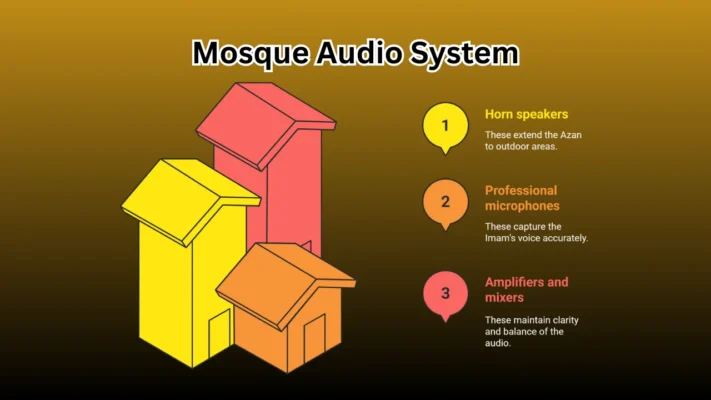
- Horn speakers carry the Adhan outdoors and from the minaret.
- Gooseneck microphones at the minbar and mihrab capture the Imam’s voice without picking up the room.
- Zone amplifiers let the hall, the ladies’ section, the courtyard and the minaret each be set to the right level.
Why it matters: worshippers at the back of the hall, in the ladies’ section and in the courtyard should hear the prayer as clearly as those in the front row.
Factors That Decide Which System You Need
Four things decide the right system: the size of the hall, its acoustics, how many separate areas need sound, and your budget.
- Coverage area: larger halls need more speakers spread evenly — not bigger speakers turned up louder.
- Acoustics: domes and marble create echo. Column speakers aim sound at the worshippers and away from the ceiling, which cuts echo sharply.
- Zones: most mosques need separate control for the main hall, ladies’ section, courtyard and minaret. This decides the amplifier.
- Power: choose an amplifier rated about 20% above the total wattage of your speakers. Extra wattage gives headroom; it does not make speech clearer on its own.
- Budget: premium brands last longer under daily use, but a well-placed mid-range system beats a badly placed expensive one.
Pro tip: most mosques in the UAE use a 100V line system, which lets one amplifier drive many speakers over long cable runs. Our guide on how many speakers you can connect to an amplifier explains the matching.
Trusted Mosque Sound System Brands in Dubai
Ahuja: Complete, Affordable Packages
Ahuja is one of the most widely used names in mosque audio across the region. Its range covers PA amplifiers, horn speakers, column speakers and microphones, so a complete system can come from one brand. The Ahuja TZA-1500DP 2-zone amplifier (AED 1,110) is a common choice for mosques that need separate indoor and outdoor control.
TOA: Built for Daily Use
TOA is known for durable public-address equipment that runs every day for years. Its reflex horn speakers, such as the TOA TH-650 (AED 277), are a standard choice for minarets and courtyards.
Bosch: Specification-Grade Speakers
Bosch ceiling and wall speakers are often chosen for new-build mosques and larger projects where consultants specify the system. Bosch ceiling speakers start from around AED 85. Bosch also owns Dynacord, whose professional amplifiers and loudspeakers are available to order for large mosques.
TOP PRO: Value for Small and Medium Mosques
Our own TOP PRO range covers zone amplifiers and horn drivers at lower prices — including the TOP PRO MP-350 5-zone amplifier (AED 588), which suits mosques that need the hall, ladies’ section, courtyard and minaret controlled separately. Spares are held locally, so repairs don’t wait on imports.
Shure: Microphones for the Minbar
Shure makes microphones rather than complete mosque systems. Its gooseneck and wireless microphones are a common choice for the Imam at the minbar and mihrab, where a clear, feedback-free voice pickup matters most. Browse our Shure microphones.
Matching the System to the Mosque Size
Small Mosques (50–200 worshippers)
A single amplifier with one or two zones, four to eight ceiling or wall speakers in the hall, and one or two horns outside. Simple to operate — often just one volume knob per area.
Medium Mosques (400–800 worshippers)
Separate zones for the main hall, ladies’ section and courtyard, with column or wall speakers inside and several weatherproof horns outside. A 250–500W multi-zone amplifier and a mixer for multiple microphones.
Large Mosques (1,000+ worshippers)
Multiple amplifiers, column speakers aimed to control echo under large domes, and outdoor horns aimed at specific areas. A DSP processor adds delay so sound from distant speakers arrives in step with the front — essential in long halls.
| Mosque Size | Indoor Speakers | Outdoor | Amplifier | Typical Brands |
|---|---|---|---|---|
| Small (50–200 worshippers) | 4–8 ceiling or wall speakers | 1–2 horns | 100–250W, 1–2 zones | TOP PRO, Ahuja |
| Medium (400–800) | 8–16 wall or column speakers | 2–4 horns | 250–500W, 2–4 zones | Ahuja, TOA, TOP PRO |
| Large (1,000+) | 16+ column speakers, zoned | 4+ horns, aimed | Multiple amplifiers, 4+ zones with DSP | TOA, Bosch |
| Every size | Gooseneck mic at the minbar and mihrab | — | Surge protection | Shure microphones |
What a Mosque Sound System Costs in Dubai
Equipment for a small mosque typically starts around AED 1,500, a medium mosque runs to several thousand dirhams, and large mosques are priced per project. The final cost depends on the number of speakers, the number of zones, cable runs, and whether the minaret needs its own system. The prices below are for individual components from our current range.
| Component | Example Model | Price (AED) | Use |
|---|---|---|---|
| Reflex horn speaker | S-KING 18″ Reflex Horn | 99 | Outdoor Adhan, courtyards |
| Horn speaker 20W | TADS DS-705 | 150 | Small outdoor areas |
| Reflex horn speaker | TOA TH-650 | 277 | Minaret and long-throw Adhan |
| Driver unit 100W | S-KING SKU-100XT | 132 | Pairs with horns for more output |
| Ceiling speaker 6W | BOSCH LHM0606/10 | 88 | Prayer hall, ablution areas |
| Zone amplifier 100W | TOP PRO IZA-100 | 790 | Small mosques |
| Amplifier 100W | TOP PRO ISA-100 | 899 | Small–medium mosques |
| 5-zone amplifier | TOP PRO MP-350 | 588 | Hall, ladies’ section, courtyard, minaret |
| 2-zone PA amplifier | AHUJA TZA-1500DP | 1,110 | Medium mosques, indoor + outdoor |
Example: a small mosque with six ceiling speakers in the hall, two horns outside and a zone amplifier would need roughly AED 1,500–2,000 in equipment, before cabling, microphones and installation.
Installation Across Dubai and the UAE
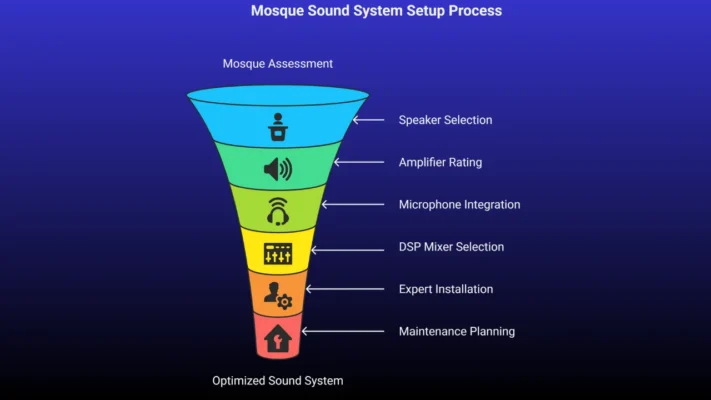
TopProSound and our sister company AudioShopAE supply and install mosque sound systems across the UAE — from the site survey and system design through to cabling, commissioning and staff training. Every installation starts with a free site survey, because the hall’s shape and materials decide where speakers need to go.
Planning a new system or upgrading an old one? WhatsApp us for a free mosque site survey in Dubai and the UAE.
What a Good Installer Does
A good installer surveys the hall before quoting, gives you a written zone plan, trains the mosque staff on daily operation, and labels every control. Ask for all four.
Custom Solutions for Every Mosque
No two mosques are the same, so the system should be designed around the building. Common solutions:
- Weatherproof horns for the outdoor Adhan, aimed away from nearby homes.
- Slim column speakers that blend into the interior and reduce echo under domes.
- Wall speakers for ablution areas and corridors.
- Separate volume control for the ladies’ section.
- Wireless microphones for lectures and events in the hall.
Mosques in Dubai operate under the guidance of the Islamic Affairs and Charitable Activities Department (IACAD), and in other emirates under their local mosque authority. Follow the authority’s guidance on outdoor Adhan volume and equipment.
Installation, Testing and Maintenance
A mosque sound system runs five times a day, every day, so installation quality and regular checks decide how long it lasts.
- Surge protection protects amplifiers from power spikes and outdoor cable runs.
- Weatherproofing matters for horns and outdoor cabling in UAE heat, dust and humidity.
- Regular checks catch loose connections and failing speakers before they fail during prayer.
- Maintenance visits keep the system consistent year-round.
Pitfall: skipping checks leads to failures at the worst moment — often during Jumu’ah or Ramadan.
Fix: schedule a full check at least twice a year, with one always before Ramadan.
Checklist: Choosing the Right Mosque Sound System
- Measure the hall and note the surfaces — marble, dome, carpet
- List every area that needs sound: hall, ladies’ section, courtyard, minaret, ablution
- Choose speaker types for each area — ceiling, wall, column or horn
- Choose an amplifier with enough zones, rated about 20% above total speaker wattage
- Add a gooseneck microphone for the minbar and mihrab, and wireless mics if needed
- Include surge protection
- Use a qualified installer and plan maintenance
Talk to our mosque sound specialists on +971 58 928 1994, or visit our Dragon Mart shop (Shop AAG-11/12, near BA Gate parking, open daily 10:30–22:00), where amplifiers, horns, speakers and microphones are in stock to take away the same day.
FAQs
How much does a mosque sound system cost in Dubai?
Equipment for a small mosque typically starts around AED 1,500–2,000, covering a zone amplifier, ceiling speakers and outdoor horns. Medium mosques with more zones and microphones cost several thousand dirhams, and large mosques are priced per project after a site survey. Installation and cabling are quoted separately.
Which brands are most reliable for mosques?
Ahuja and TOA are the most widely used for their reliability and value, with Ahuja offering complete packages and TOA known for durable horns. Bosch suits specification-grade projects, TOP PRO offers value for small and medium mosques, and Shure microphones are a common choice for the minbar.
Do all mosques need outdoor speakers?
Most mosques need at least one outdoor horn speaker for the Adhan. Small mosques in dense residential areas may need only one or two, aimed carefully. Follow the guidance of your mosque authority on outdoor volume.
Can a small mosque use a large system?
An oversized system is usually a waste of money and can make echo worse if speakers are driven hard in a small hall. Match the number of speakers and zones to the space. It’s reasonable to choose an amplifier with spare zones if you plan to expand.
How often should a mosque sound system be serviced?
At least twice a year, with one full check before Ramadan. Outdoor horns and cables should be inspected more often in summer, when heat and dust are hardest on equipment.
What speakers reduce echo in a mosque?
Column speakers reduce echo best, because they direct sound toward the worshippers and away from the dome and walls. Using more speakers at a lower volume, placed closer to the congregation, also improves clarity.